


Chapter 2: Writing for an Ongoing Series
──How do you go about structuring each chapter in an ongoing series?

Sui Ishida
I try to leave the reader with the impression that they've seen some real development, even in chapters with heavy exposition. Battle-focused chapters, too, would be boring if they were comprised solely of fighting sequences, so I always try to find a way to express a character's inner feelings, like through emotional exchanges.
So even when a scene has to be drawn out, be it expository or combat, I don't sweat it as long as the story arc keeps these elements in balance.
──Tons of new characters appear in "Tokyo Ghoul:re". Were they designed and conceived of beforehand? And did you have any particular method for introducing them into the story?
Sui Ishida
Actually, I felt like there were too many characters in "Tokyo Ghoul" and initially wanted to trim the roster down. But then I realized that that was kind of fitting for the series, in a way. Some of the newer characters I had planned out beforehand, but there were also some I came up with on the spot. Even when I have a preconceived plan for a character, though, some may suddenly disappear from the story, or even be reborn in another form, so I do try to mold each character into whatever best fits the situation. I don't really have any particular methods, however. If left unchecked, I'll just inevitably end up creating more and more characters. So I try to rein myself in by asking if the character is actually necessary—except, I might also just throw someone in because it feels right, even if they're a little extraneous.
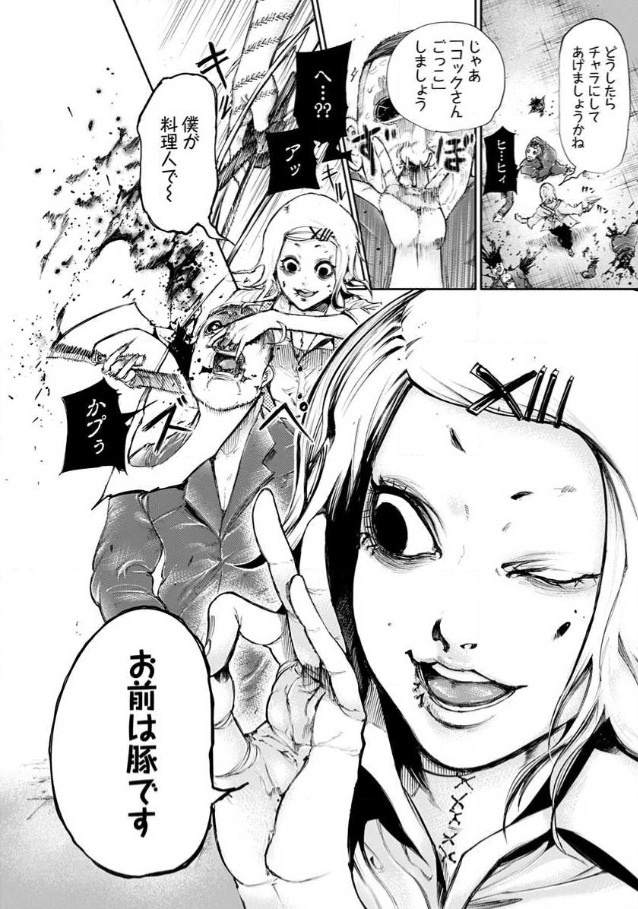
──Do you have any special techniques or particularities for expressing a character's emotional state to the reader?
Sui Ishida
No special techniques went into "Tokyo Ghoul" as far as that's concerned. I think I just went with whatever felt right. And I don't mean what felt right for the story, but just what vibed with me at the time—even if it outright conflicted with the story. I think I might've gotten overly fixated from time to time, though I couldn't begin to tell you why.
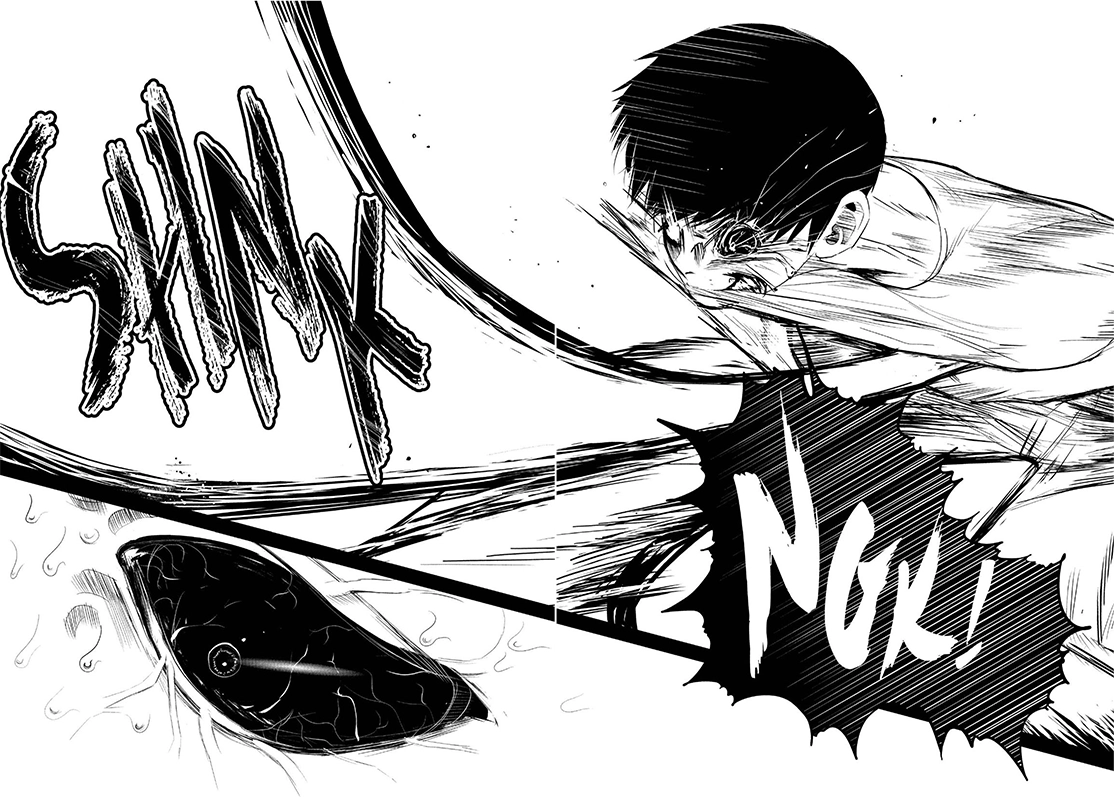
──Your approach to paneling is unique, with your use of irregular shapes and the constant variance between small panels and double-page spreads. What kind of guidelines do you follow when setting all that up?
Sui Ishida
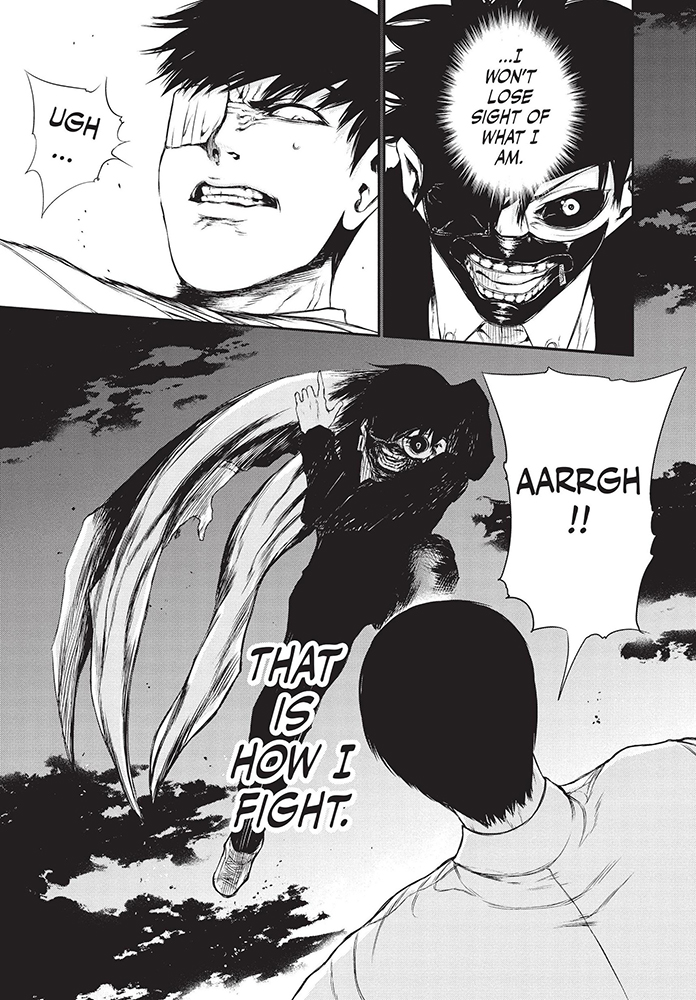
I think I mainly consider readability and what I imagine would look most dynamic. I often use irregular panels to guide the reader's eye. And a lot of thought goes into the double-page spreads, but that process is top secret, I'm afraid.
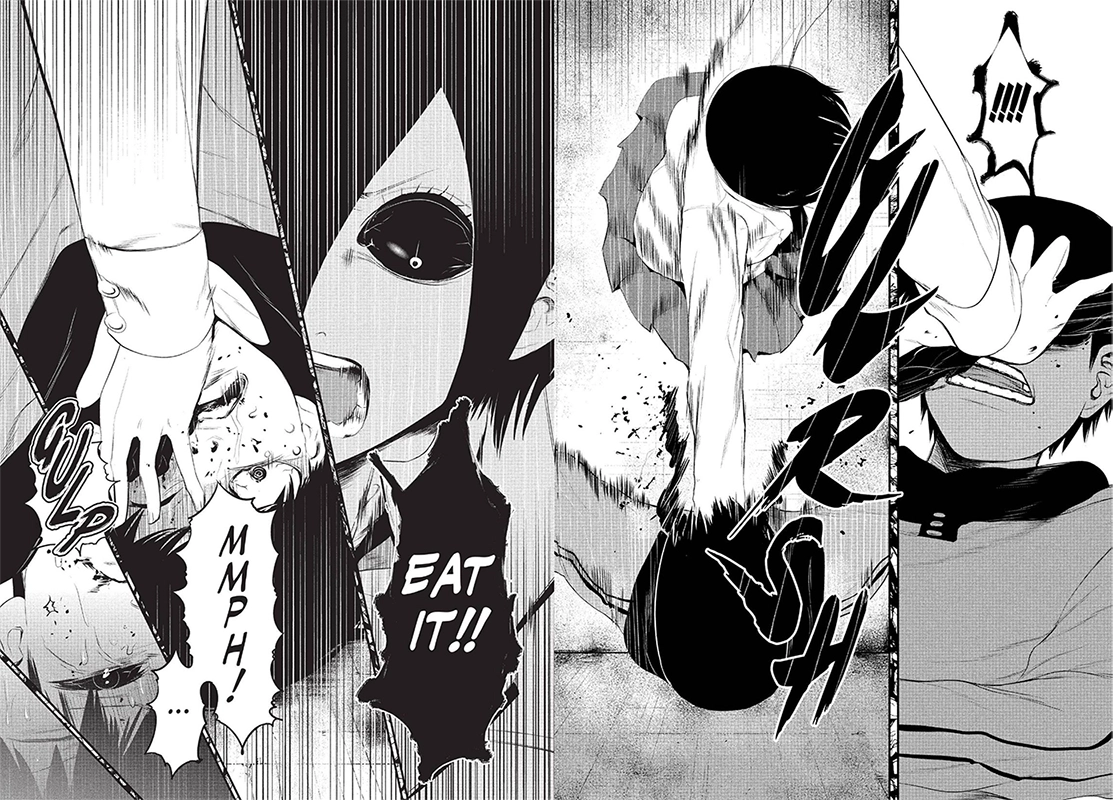
──Particularly in regards to your action scenes, how have you gone about improving your approach to composition and comic book "cinematography"? I'd love to hear more about your methods.
Sui Ishida
I didn't exactly study or train to improve my skills or anything, but I do think I naturally got better as I progressed through the story of "Tokyo Ghoul". As for methods, I can't say that I really have any to speak of, either. I just strove to make it look good; that's it.
──Each chapter in the series includes a double-page spread or large panels. Do you have a stock of ideas you pull from, perhaps, for their composition and dialogue?
Sui Ishida
No, I'm afraid I don't have a stock of double-page spreads waiting in the wings. And I may jot down two or three lines of dialogue I'd like to use from time to time, but not enough for me to say I have a reserve of those, either.
──The composition, detail, and color palettes used in your illustrations, particularly your covers and title pages, really catch the eye with their sheer novelty. How do you come up with them?
Sui Ishida
I just go with my gut and draw whatever I feel would look cool at the time. What looks cool to me changes depending on when I happen to be working on it, though, so that might account for the "novelty" you speak of.
My skills are still a bit lacking when it comes to composition, with a lot of rough edges, so I'm always striving to improve myself bit by bit, and find a style better suited to the person I am now.
──You put a great amount of detail into clothing and props. Do you have a reserve of ideas you draw upon? Or are there any sources you use for reference, perhaps?
Sui Ishida
I think I'm just always aiming to create something that makes for a good picture.
I don't put anything to paper unless I'm planning to use it, so I don't keep any back stock of ideas at all. My approach is just to create whatever the situation demands.
I think my inspirations, then, come from whatever I've been looking at recently.

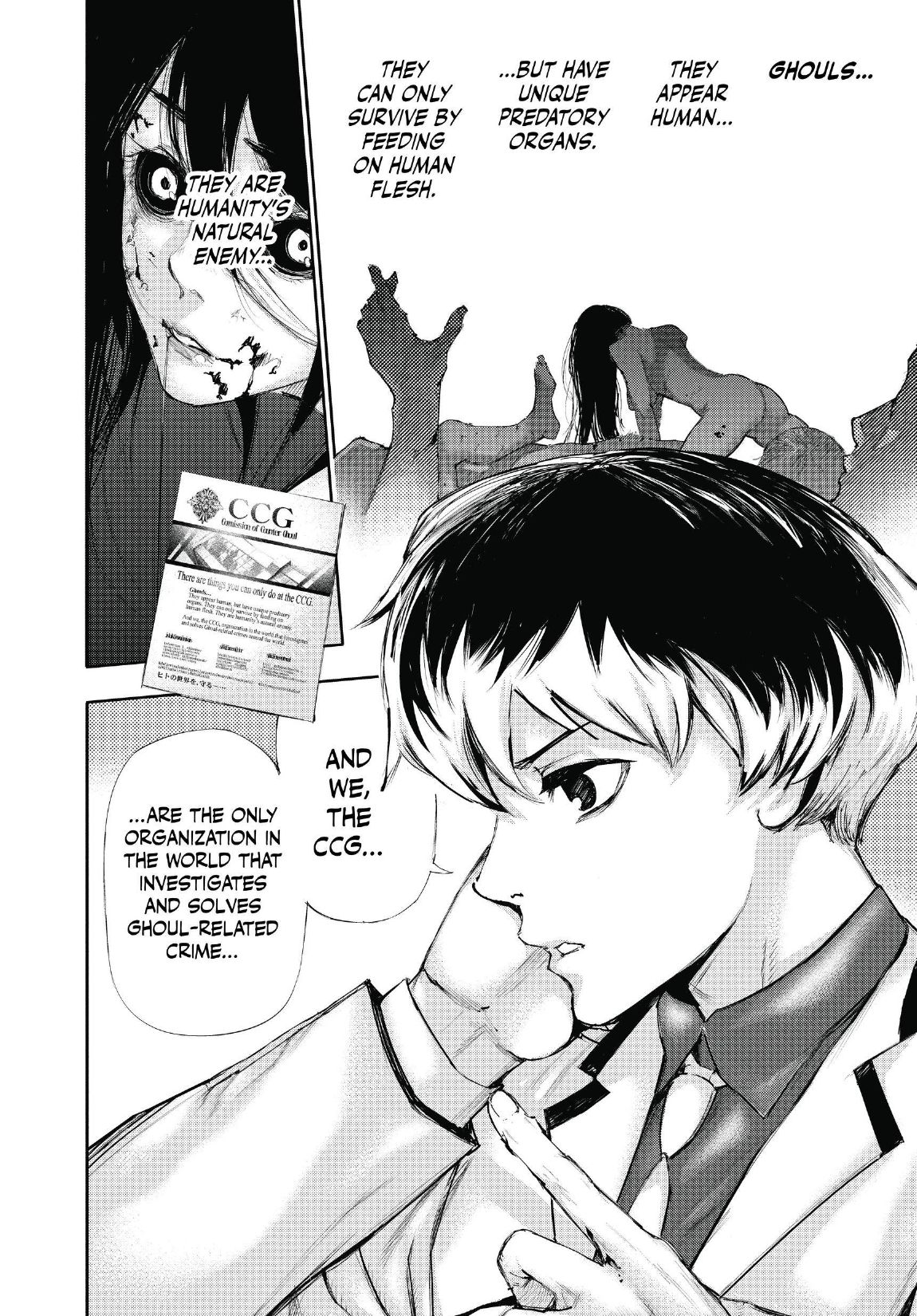
──You started working on "Tokyo Ghoul:re" immediately after finishing "Tokyo Ghoul". When did you make the decision to create a sequel, and why did you change the title?
Sui Ishida
I don't actually remember!
I think the idea was there from the very start (*to tell the story from the viewpoint of the investigative team).
But the title change really just came from me wanting to convey to the readers that this was the start of a new tale altogether. It's a major turning point in the series, so using a new title helped keep that clear for me, too.
Part 3 will be released on Friday, August 28, —so please look forward to it!!