

Tsubasa Ozora, a Character Readers Can't Get Enough Of
──What did you have in mind when you created the main character, Tsubasa Ozora?

Yoichi Takahashi
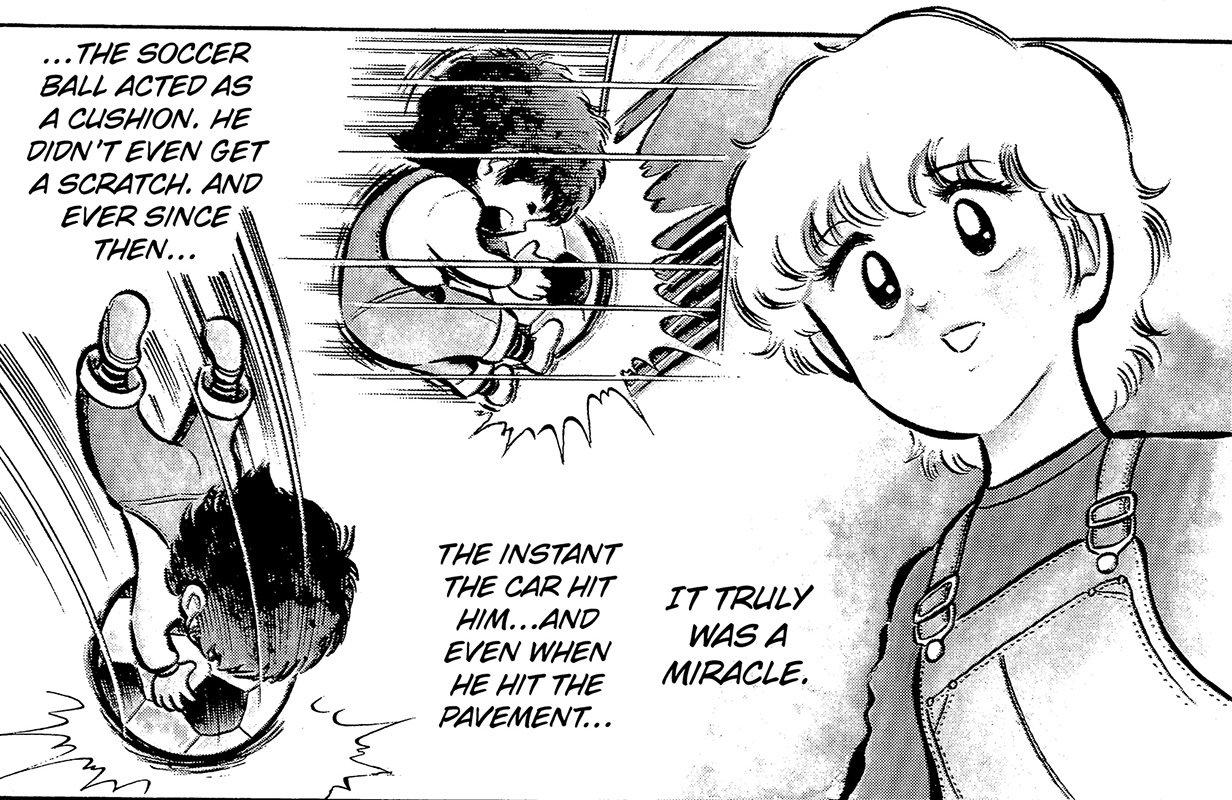
Tsubasa is a boy born to become the best football player in the world. In order for that to be feasible, he needed to have played football since he was very small. To that end, I started the story from when he was in elementary school. I also gave his first encounter with football a sense of destiny by having a ball save him from getting hit by a car, furthering the idea that he's been blessed by football. So I started out by thinking of the world's best football player and worked backward, imagining what kind of life they would have led.
──Is that also why you gave Tsubasa such a positive outlook?
Yoichi Takahashi
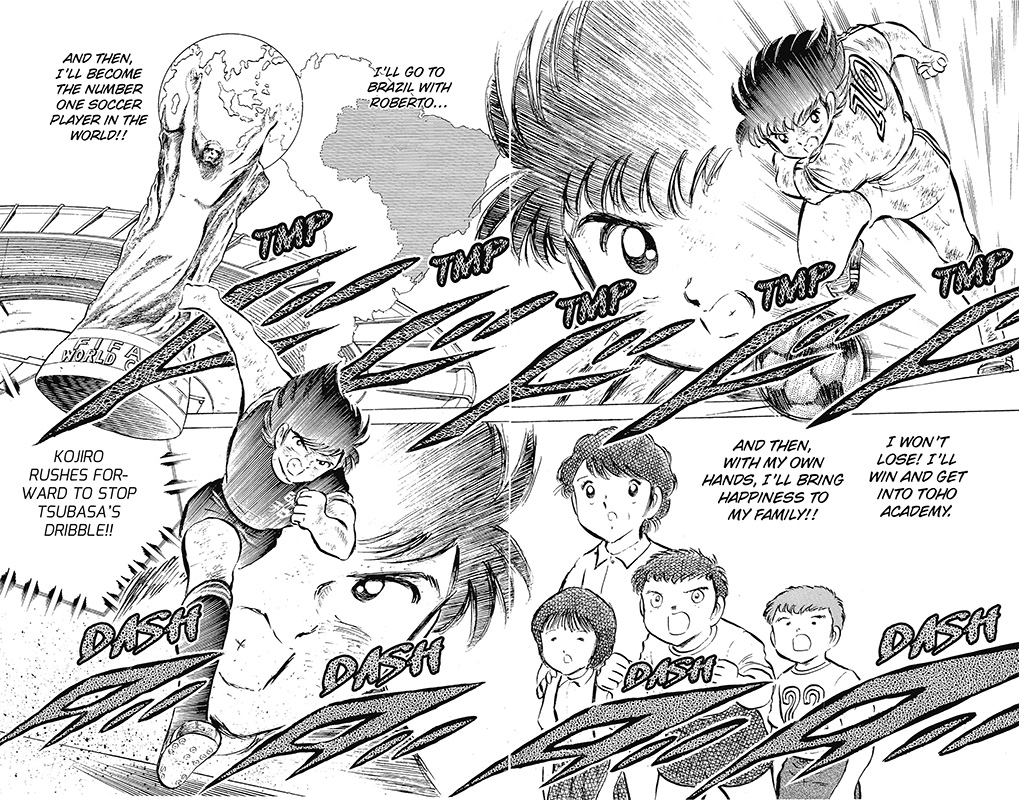
That's right. It shows how tough he is. Or at least how happy-go-lucky he is. (laughs) He truly believes from the bottom of his heart that he can become the world's greatest football player. From there, I was able to start imagining his feelings and thoughts.
──Were there any particular devices you employed from a design perspective?
Yoichi Takahashi
Yes, the way his hair moves. I thought having his hair blow back when he runs would provide a sense of speed, so I designed his hair with that particular effect in mind. I think I was able to accomplish that quite well, if I do say so.
──Tsubasa is a character who has been depicted across an unusually long span of his life. What techniques did you employ to show the ways he's grown and changed?
Yoichi Takahashi
For starters, he changed physically as he moved from elementary school to middle school. I also focused on portraying his youth when he was in elementary school, and once he entered middle school, I added elements of romance. Then, when he grew even further into an adult, I gave him the mindset of a professional athlete, and so forth. I was mindful of adding some kind of small change in each new installment in the series.
With that said, Tsubasa's journey is still ongoing, as he has yet to become the world's top player, and Japan has yet to win the World Cup.
──Many of the characters find their lives and behavior taking a turn for the better thanks to their interactions with Tsubasa. Was that something you incorporated intentionally when designing him as the main character?
Yoichi Takahashi
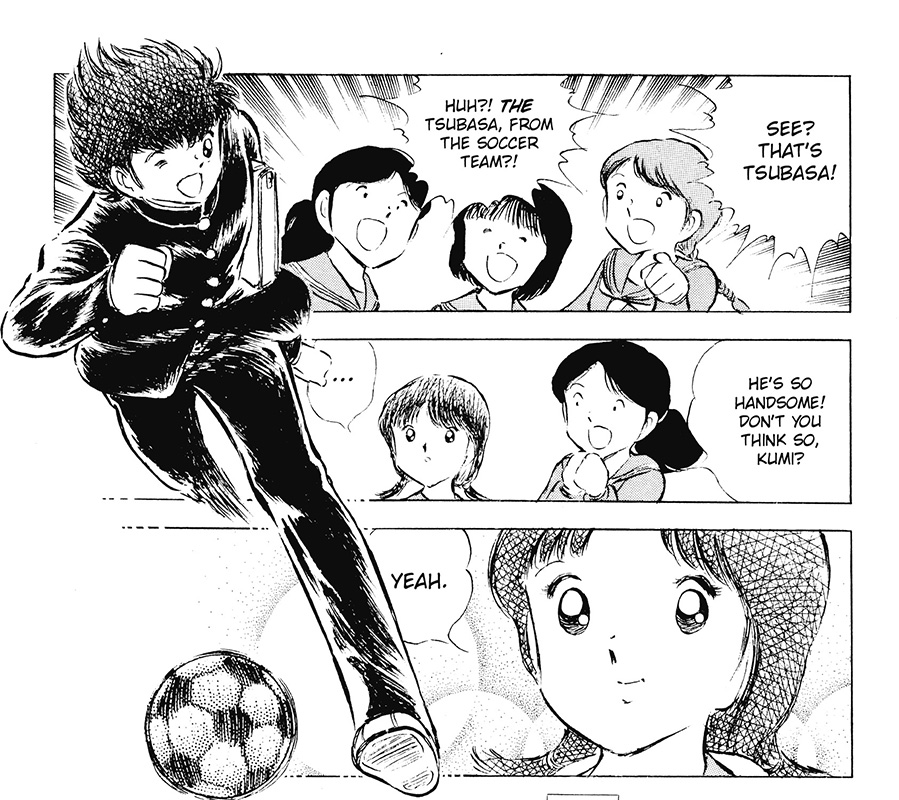
One of the best things about sports is that you can do everything in your power to defeat your opponent during a match while also acknowledging their skill and being friendly with them once the match is over. I wanted to incorporate that aspect into the manga as well. That's why even though Hyuga and his team start out as enemies, they find themselves influenced by Tsubasa over the course of their matches up until the point that they have no choice but to acknowledge his abilities.
──Is the portrayal of their emotions clashing during the matches designed with that end in mind?
Yoichi Takahashi
That's part of it, but what I really wanted to communicate to readers was how the players are feeling as they play. You can't do that in the broadcast of an actual game; I think it's something you can only really express in a manga. Readers can then empathize with the characters, which I think is a huge element of what makes a work appealing.
I played baseball when I was in school, so I do think I understand how athletes feel during a match. That said, there is a large element of imagination involved as well.
──Do you do a lot of football research?
Yoichi Takahashi
I've gone abroad to speak with players, and toured stadiums and clubs when it seemed necessary. Hearing the thoughts of actual professional players was very helpful. When I interviewed Hidetoshi Nakata back in the day, he was even kind enough to tell me his training routine. (laughs)
──Tsubasa has been a beloved character for forty-five years now. Do you think there's something about him that you particularly succeeded with or was the secret to winning the support of readers? If so, what is it?
Yoichi Takahashi
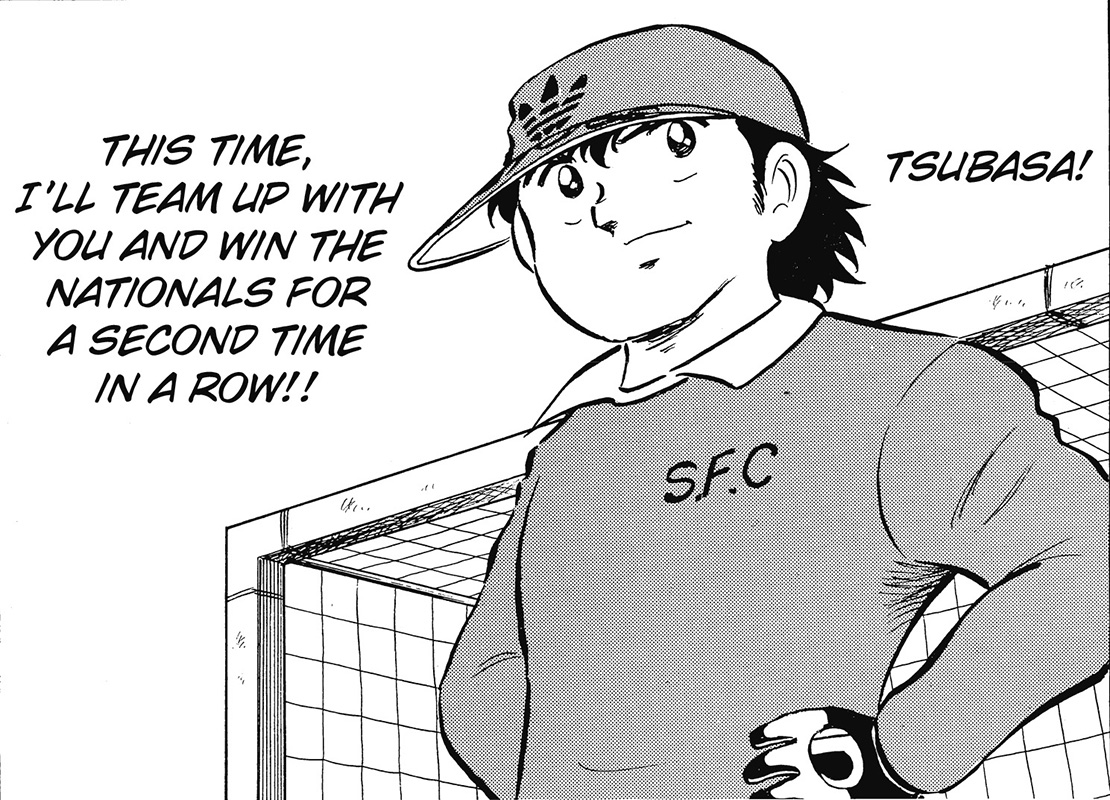
Supposing there is a particular reason, I would imagine it probably isn't Tsubasa alone. Tsubasa may be the main character, but he's surrounded by so many types of other characters, both friends and rivals alike. I introduce new characters while thinking about what kinds of players would make for an interesting match when they clash with Tsubasa, so that writing process might have been what resonated with people.
Not only that, but regardless of whether they're club teams or national teams, no team can keep the same lineup forever. Having these unique characters who each grow, be it into opponents or friends, allows for so many different kinds of stories. Tsubasa takes that in stride and shows off new techniques and strategies, which in turn adds a lot to his personal appeal.
I think having so many characters around him to draw out his charm is what has allowed me to keep writing about him for so long.
──What goes through your mind when you introduce a new character?
Yoichi Takahashi
I guess I start by thinking, "I bet Tsubasa would have a hard time if he went up against someone like this," and then go from there. (laughs) When a type of rival that I've never depicted before shows up, it gives rise to a brand-new story.
Recently, I've been able to add a lot of interesting scenes thanks to Michael. And while Rivaul is Tsubasa's teammate, they're also rivals competing for the same position. This allowed me to portray a new side to Tsubasa that we hadn't seen before.
──Is there a character who has been particularly helpful to you throughout the series?
Yoichi Takahashi
That would be Hyuga. From his inner thoughts to the environment he finds himself in, I think he's always been Tsubasa's polar opposite, and has a completely different appeal from Tsubasa. When I get tired of writing about Tsubasa, writing about Hyuga makes writing feel fresh again. It's a way for me to switch things up and get a change of pace.
Additionally, Misaki is a character who is very hard to get a grasp on, even for me. His sense of camaraderie is incredibly strong, yet he's a character capable of being a rival. I think it would be interesting for him to one day return to being a rival to Tsubasa.
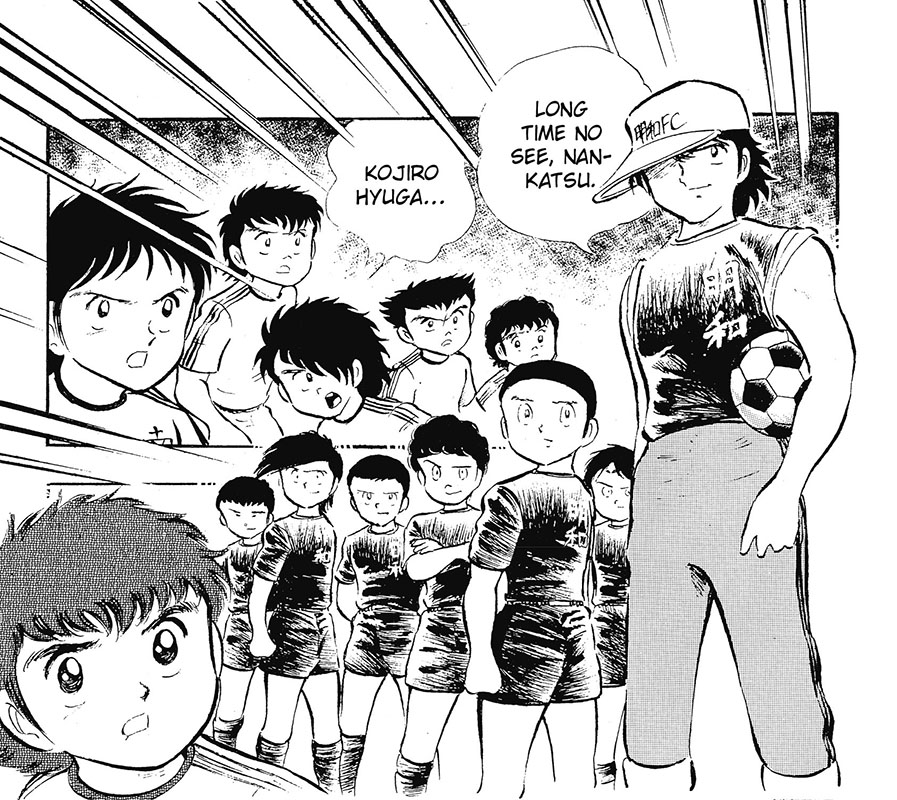
When he first shows up, he's the direct opposite of Tsubasa's clean image.
──Is there a trick to handling so a large cast of characters within the story?
Yoichi Takahashi
Are you asking how I keep track of them all? When Tsubasa and Hyuga are facing off, I always try to write while also thinking about how the characters around them outside of the panel might be feeling. football itself is a competitive sport in which having a big-picture perspective is very important, so that might have been what helped me cultivate this way of looking at things.
Taking in the Reaction from Abroad
──"Captain Tsubasa" is incredibly popular outside of Japan as well. When did you first become aware of the response from fans abroad?
Yoichi Takahashi
I think it was sometime in the very early 90s. That was around the time the anime started broadcasting overseas. In those days, character names were often changed to match local languages, and a lot of people watched the anime without even realizing the anime or the characters were Japanese. Apparently, many people were surprised when they found out. But now even professional players know about Tsubasa. It feels a bit strange.
──Do you think about the fans around the world when you're writing?
Yoichi Takahashi
I wasn't thinking about a foreign audience when I started writing the series, but the fact that they have accepted the series the way they have has given me some confidence in the way I think about football.
And once Tsubasa started to compete internationally, I think a lot of readers were happy to see their own countries appear in the story. Mexican fans seemed to be incredibly excited when Espadas joined the series.
When I'm writing, I look into the country's team and their characteristics and try to incorporate them. I also look to the country when designing the characters and team lineup as well. I have the German team built around a single prodigy, Schneider, while the Brazilian team plays with a lot of powerful individual techniques. In Spain, passing is considered particularly important, so the whole team has good footwork. Things like that.
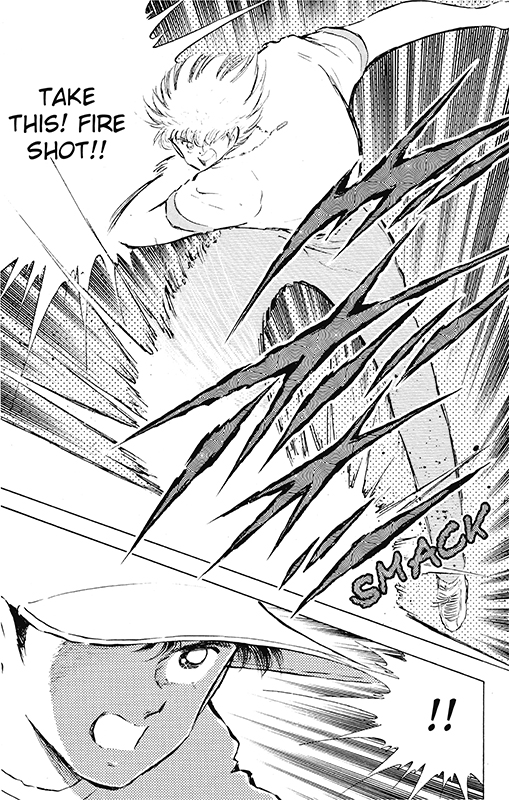
Germany's prodigy, Schneider, hailed as the "Young Emperor."
──Before we finish, do you have a message for readers abroad?
Yoichi Takahashi
Since the series has gone on so long, I'm lucky to say that some parents in Japan have been able to enjoy it with their children for three generations. I think that has also made it a manga that's quite easy for new readers to get into, so I'd be very happy if others could enjoy it the same way. I would be thrilled if the series could be loved by a fourth or fifth generation of families, or even longer.
The story begins in 1980s Japan, with rules that are different in some ways from today, but if you can forgive that (laughs)... then I hope you can enjoy the thrill that football brings.