

INDEX
- How did you study or develop your skills in creating manga?
- What tools or environment do you use to create manga?
- How much time do you dedicate to creating manga in your daily life? Are there any challenges specific to balancing this with school or work in your country?
- Have you noticed any differences in expression (e.g., dialogue or visual style) between your country and Japan?
- What kind of support would you find most helpful when debuting in Japan?
- What does manga mean to you?
How did you study or develop your skills in creating manga?
Finitsu
During the beginning of my development as a mangaka there weren't a lot of options here in Portugal to help me through it, so I mostly had to figure it out by myself step by step.
I remember watching and rewatching all episodes I could find of “Manben” (※1)to see if any sensei could give me just one more piece of wisdom to use, I'd fall asleep watching mangaka drawing videos on youtube, analyzing why each stroke of the pen was there.
I remember picking up any and all books I could find of anatomy, studying game character designs, trying to understand the philosophy behind every choice.
I would take notes of all manga I read, filling it with post its and writing my thoughts about the story and its development on my notebooks.
I would show everyone I knew my rough work, and I'd take any and all criticism, even those that hurt, because if I could improve from thanks to them it would all be worth it.
※1: A documentary TV program hosted by manga artist Naoki Urasawa, featuring in-depth coverage of renowned Japanese manga creators.
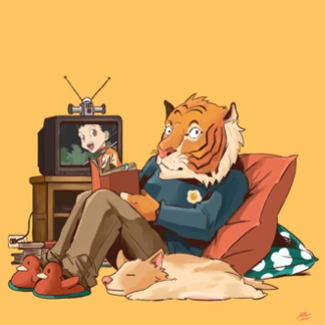
YUPASORN
I began by practicing and drawing inspiration from the manga I loved. Throughout my journey, I consistently entered manga competitions; even when I didn't win, the constructive feedback I received from each submission was invaluable for my growth. Later on, I had the opportunity to work as an assistant in a manga studio, where I gained practical insights and guidance from senior artists that further refined my skills.

Kub
Read, watch, and listen to everything and anything. You never know what might inspire you. A song could set the mood and help you build the world of a story. Watching a movie could help you add layers of complexity to a character. As a writer, this is how I study.
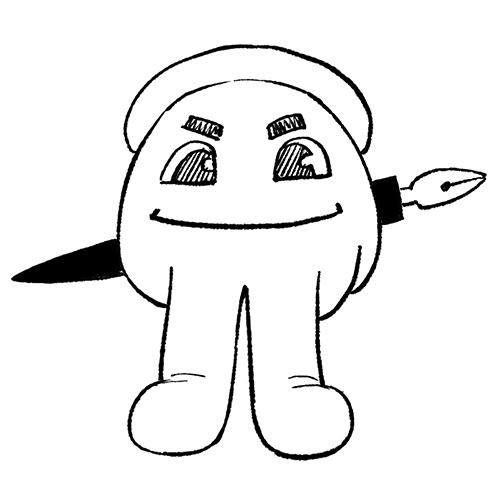
Yoikaha
I mostly learned from YouTube. There, I studied how to draw anatomy properly, how to draw faces from different angles, how to draw perspective, and many other things. I realized my skills improved drastically after I started taking anime and manga-style drawing commissions. After spending a year working on commissions and then returning to manga, I could really feel the improvement in my drawing.
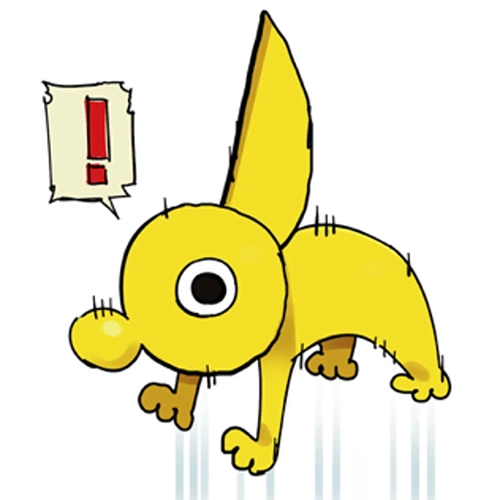
Damnus
It has been through countless failures and repeated practice. Also, listening to and evaluating all kinds of criticism was immensely helpful. That being said, not every piece of feedback necessarily aligns with what we are aiming for, so I believe it is equally important to know which critiques to incorporate when building our future projects.
Finally, I must mention that ever since I began drawing manga, I have dedicated myself to absorbing information about manga production through interviews, books, and videos. I think this method of learning is highly underrated. I want to express my sincere gratitude to all the editors, manga artists, and scriptwriters who took the time to document their processes in order to share their craft.
Examples of this include Save the Cat!, Naoki Urasawa's Manben, Hirohiko Araki's Manga in Theory and Practice, Even a Monkey Can Draw Manga, Deleter Manga Technique, the SILENT MANGA AUDITION's Japanese Manga 101, and the questions Hosono-sensei recently answered.
What tools or environment do you use to create manga?
Finitsu
I mostly work digital, for monetary and time-management reasons, though I'd love to transition to analogue as I absolutely love the feel of it.
YUPASORN
I use paper and pencil during the conceptual and brainstorming phase, then transition completely to Clip Studio Paint for the entire production pipeline.
Damnus
Currently, I work digitally using a computer and an XP-Pen Artist Pro 16 (Gen 2) tablet, along with a Samsung tablet for when I'm on the go. On both devices, I use CLIP STUDIO PAINT EX for manga production.
For backgrounds, I use photos I've taken myself, which I retouch later so they blend more harmoniously with the overall artwork. Recently, however, I've started using Snaptoon to create 3D backgrounds.
How much time do you dedicate to creating manga in your daily life? Are there any challenges specific to balancing this with school or work in your country?
Finitsu
I work about 8-12 hours a day on manga, it has definitely impacted my work life outside of it, but I like to feel busy so it never bothered me too much.
Kub
For script writing, it's usually just an hour or two out of the day. I kind of like to keep everything in my head and then write the whole story in one go. When I have to draw, I usually set aside about two to three hours a day, but that's something I've only started doing recently.
Yoikaha
I dedicate around one to two hours every day to creating manga. Most of that time is not spent drawing, but thinking about stories.
Right now, I’m in my final semester of university while still working on commissions. Physically, doing all of those things at the same time is manageable. But mentally, it can be quite exhausting. Especially when I get stuck and cannot come up with new story ideas, sometimes I think, “What kind of life is this?”
Have you noticed any differences in expression (e.g., dialogue or visual style) between your country and Japan?
Finitsu
I definitely have, the biggest difference is in onomatopoeias. In terms of art it really does depend on which artist we refer to, as in my country we don't have yet a very big manga community, we mostly only have western comic artists.
YUPASORN
They are actually very similar, as the manga industry in my country has been directly influenced by Japan. However, a key difference lies in production resources; we do not have access to the same scale of manpower and studio support. As a result, many local creators attempt to handle the entire production pipeline completely solo. While this limitation can make it challenging to achieve flawless perfection, it has uniquely forced artists to innovate, leading to a highly diverse range of personal artistic styles born out of those creative constraints.
Kub
In Japan, there are certain phrases and types of comedy in manga that are normalized there. Things like the beach episode in anime are a good example. I feel like manga fans in the States see these tropes so often that they try to add them into their own work, but it doesn't have the same vibe. The dialogue and visuals in Spider-Man aren't the same as they are in One Piece. You don't see Mary Jane running with toast in her mouth while wearing a school uniform. As someone from the United States, the difference is like day and night to me.
Yoikaha
Yes. I think Japanese expression, especially in manga and visual storytelling, tends to be more subtle and atmospheric compared to my country. In Indonesia, emotions are often expressed more directly through dialogue, while Japanese works sometimes rely on silence, small gestures, or visual symbolism to convey feelings.
Damnus
Absolutely. While it is true that the Japanese influence is undeniable, we take great pride in our own culture in my country, so it is quite common to find references and nods to shared interests at a national level.
I should also highlight that many works from my country tend to carry a specific political undertone—which, even if subtle, is usually clear. I want to emphasize that this often enriches the works (such as themes related to social disparities, specific eras, or historical events that continue to deeply permeate our society).
What kind of support would you find most helpful when debuting in Japan?
Finitsu
Definitely translation, I think pretty much everything else I could handle fairly competently, but this is something I am lacking in as a foreigner. Also a truthful critic, I want to know if there's anything I can improve in my work always, I strive for bettering myself as an artist and story-teller, and I need criticism to do so.
YUPASORN
Initially, I would find editorial guidance the most helpful, specifically regarding how to tailor my work to resonate with Japanese readers while still preserving the unique identity within my art. I believe this distinct cultural identity is exactly what allows international creators to bring something fresh and contrasting to the domestic Japanese market. Naturally, I am fully open to cutting out elements that don't work. Beyond that initial phase, support in terms of production logistics would be incredibly valuable.
Yoikaha
The most helpful support for me would be editorial guidance and communication support. I would also appreciate support with language and publishing processes, especially understanding how Japanese readers respond to pacing, dialogue, and emotional expression.
What does manga mean to you?
Finitsu
There isn't a grandiose answer to this question, many people ask me why I chose manga over some other area I would also enjoy, honestly I never have a concrete, consistent answer.
Maybe it's the way I like to see people's eyes light up when reading something I made, maybe it's because of the expressive freedom it gives me, or maybe it's just because the black and the white look so good on paper. I don't know, and I don't think I'll ever know, but what I do know is that it's the thing I want to do the most.
YUPASORN
To me, manga is a friend who speaks the words I cannot express in real life.
Kub
Manga is life. Without it, I wouldn't be here. I want to do it as a career. It gives me joy during my darkest times, and it's my reason for living. So, to me, manga is life.
Yoikaha
To me, manga means “Resonance.” I believe the goal of creating manga is to preserve feelings that are difficult to express through ordinary words, and to make other people feel the same emotional resonance that the mangaka feels.
Damnus
I believe that, in one way or another, my purpose in life is tied to manga. Otherwise, I feel my existence would have no meaning. Manga is the door through which I share stories with others and try to make them laugh.
The boundless passion for manga they showed us effortlessly transcends borders and language barriers. Using MANGA Plus Creators as a launchpad, these up-and-coming creators have taken their first steps onto the global stage. We eagerly look forward to their bright futures, and we can’t wait to see what kind of stories they will create next to thrill readers around the world.