What inspired you to start creating manga, and when did you begin?
Finitsu
When I was 14 I read my first manga, I remember having the distinct feeling that this was what I wanted for my future, as it joined all the aspects I most love of the creative process. Drawing, writing, to use a distinct vision of what I want for my story, and the ability to do so alone, as I have a hard time working with others.
Since then I have practiced feverishly both my drawings skills and story-telling skills to make sure I was good enough to show my work and be proud of it, and finally, in 2022, I had the confidence to begin my manga career by publishing my first work, "Twig's Tale" on the Silent Manga Audition competition, and though I didn't win anything, it did spark the drive and passion to keep creating more and more.
YUPASORN
It all started in my childhood with a love for watching anime and sketching the characters. This passion grew until I began creating my own hand-bound manga and sharing them with friends around the age of 10 or 11.
Kub
I've always had a wild imagination, mainly because I grew up watching “Naruto”. As a kid in elementary school, I would daydream in the lunchroom, my eyes darting all over the place as I imagined anime fights happening around me. I was definitely seen as weird since I didn't talk much either, lol. I channeled my imagination by creating stick-figure comics. Since I wasn't the best artist and was inspired by a website called “Stick Page”, it felt like the best way to bring my ideas to life.
Once I got to college, I started writing scripts for manga. I planned to start drawing again and refused to give up on my dream. I created a series called “Assins”, but I eventually grew tired of drawing. I then tried writing a novel, but it wasn't working out. Around that time, my dad passed away, and it forced me to realistically think about how I could make my dream come true. That eventually led me to find an artist who could help bring my ideas to life.
Yoikaha
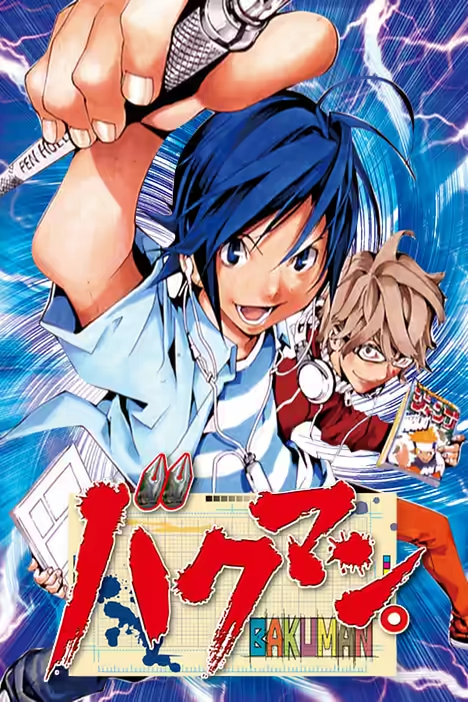
I was inspired to create my own manga after watching the anime “Bakuman。” when I was in middle school. However, I only started drawing manga after graduating from high school. At that time, I did not have a job and did not know whether I would be accepted into university, so I was confused about what to do.
Eventually, I tried my luck by creating a short manga and submitting it to a local publisher. It was rejected because both my story and art were very poor, haha. Even so, the publisher’s kind comments encouraged me not to give up on creating manga.
Damnus
It all began with my older brother's influence. His intense desire to draw on absolutely everything—walls, paintings, books, and textbooks—infected me. To satisfy that urge to stain everything with my own identity, I filled whatever I could get my hands on with drawings.
Later on, all of this evolved into a desire to tell stories. I realized that manga was the best possible medium for me to express what I wanted to show the world.
I firmly believe that manga is the most perfect format for anyone who wants to tell a story. I discovered this as a child when I used to make my own manga using nothing but paper, a stapler, and a pencil. That was all it took to convey something, and it was more than enough to captivate me forever.
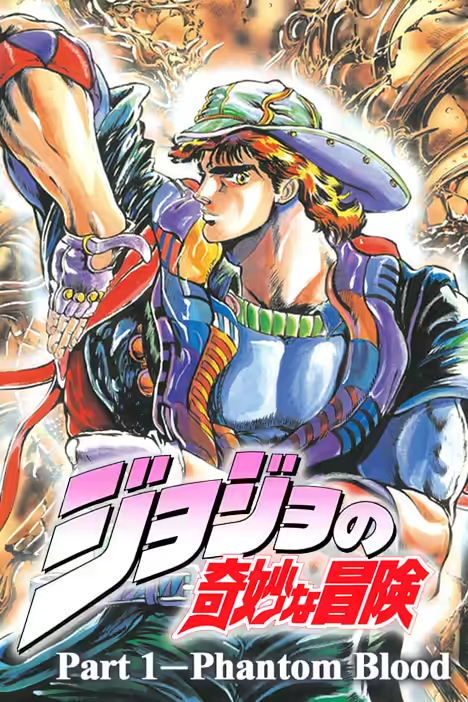
The definitive turning point, however, was when I discovered Hirohiko Araki's “JoJo's Bizarre Adventure”. Thanks to that series, I became completely obsessed with the idea of fulfilling my own destiny and calling—creating something that would inspire others.
Which manga artists have influenced you, and why?
Kub
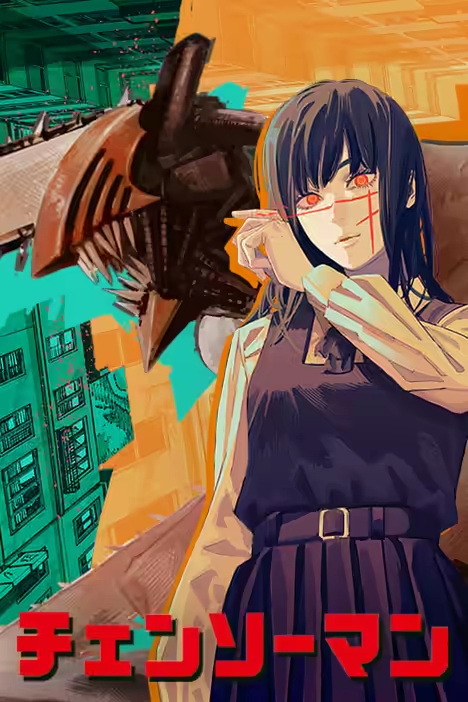
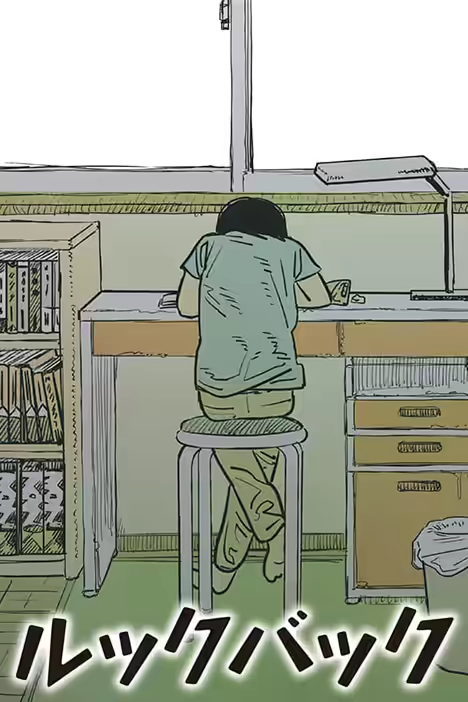
Yoshihiro Togashi is one of my biggest inspirations because he created a manga with the greatest power system of all time. Tatsuki Fujimoto inspires me because he showed how you can control chaos through “Chainsaw Man” and how creative you can get with paneling in “Look Back”. Hiro Mashima also deserves his flowers since he introduced me to manga through “Rave Master”.
Yoikaha
At the beginning of my manga journey, I was heavily influenced by Kazue Kato on the art side. I even tried to imitate the paneling and camera angles in her manga. Later, I became influenced by Tatsuki Fujimoto, and without realizing it, I started imitating his drawing style as well. From the storytelling side, I really love the way Tatsuki Fujimoto tells stories. Fujimoto-sensei made me realize that manga does not always need grand conflicts or complicated explanations to leave a strong impact. Sometimes, very simple moments, awkward conversations, or even silence can feel deeply emotional and human. It feels like he opened another side of my brain.
Damnus
Hirohiko Araki. I would like to give special mention to his book, “Manga in Theory and Practice”. This book laid the foundation for how I currently create my works.
Regarding Sui Ishida, I deeply admire his art style, both in his inking and coloring. My favorite aspect is his synthesis and simplification in illustration; his work is an excellent example of "less is more," and it is currently my primary reference when drawing.
I discovered Naoki Urasawa through his work “Billy Bat”, and I have admired his career trajectory as a manga artist ever since. Just like him, I hope to release many high-quality works into the world. I also highly praise his linework and his ability to synthesize details, especially in faces and clothing.
Which works have influenced you, and why?
YUPASORN
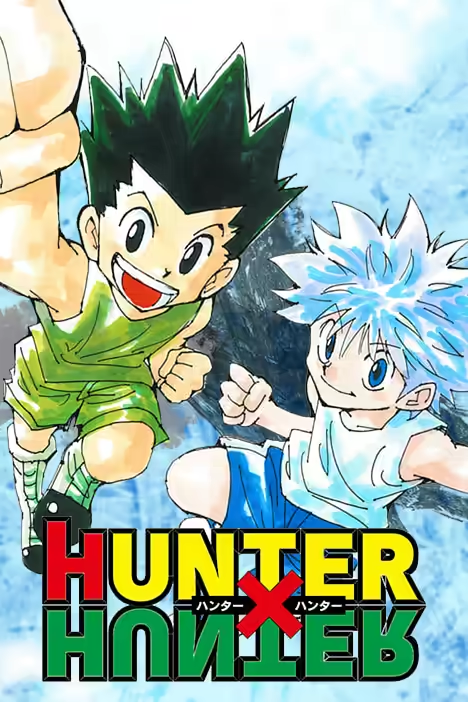
“Hunter x Hunter” is my all-time favorite manga. Its gripping narrative drive and unpredictable plot twists continuously surprise and captivate me to this day.
“Bakuman。” is the manga that inspired me to pursue a career as a professional comic artist. It deeply resonated with me, helping me understand both the immense hardships and the unique charm of the manga industry.
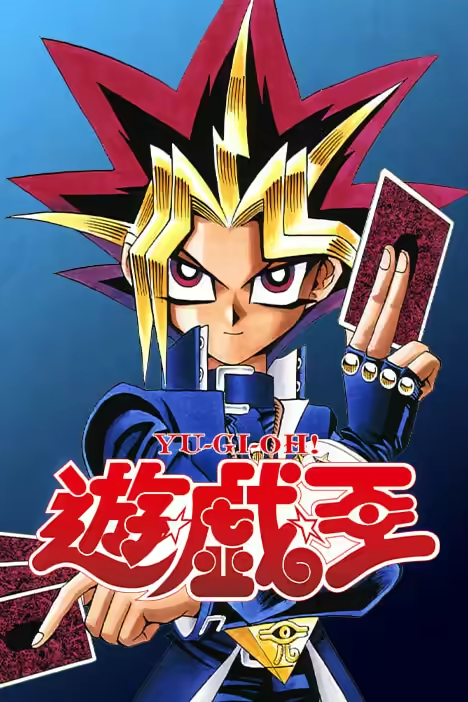
“Yu-gi-oh!” Is the very first manga I ever read. As a child, I started out playing the trading card game with my friends, which sparked a desire to fully understand the story behind the cards and ultimately led me to discover the manga.
Kub
“Fire Punch” and “Look Back” by Tatsuki Fujimoto-sensei probably influenced my work the most. There was a chapter in “Fire Punch” where no words were exchanged. It was very interesting because it was a revenge scene, so you'd think there would be a lot of screaming and dialogue, but it was completely silent. I think that's when I realized there are little things you can do like that to completely change the storytelling.
“Look Back” took storytelling to a whole different level. I think that one-shot used every single thing that makes manga unique to its advantage. The way the paneling was shaped to match a phone screen was masterful. I think it's the greatest work I've ever witnessed. That one-shot taught me that, to make the best work possible, you have to make sure you're using your format to its fullest advantage. To put it another way, you want to create a work that could only function as a manga.
A lot of old movies, especially ones that try to tell a story in a unique way. It's hard to specifically name just one movie, but a good example would be “Pulp Fiction” by Quentin Tarantino.
Damnus
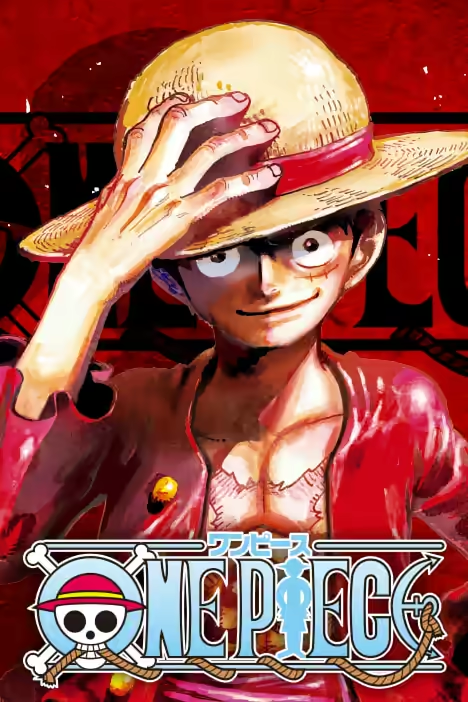
“One Piece” is the work I respect the most, along with its creator. My older brother is a huge fan of the series, and if he hadn't introduced it to me, I definitely wouldn't be drawing manga today. This is because many of my early works were copies of it, and even now, it continues to influence me in countless ways—through its art, story, composition, and so much more. To me, it is a perfect masterpiece, and I earnestly aspire to convey even a fraction of the emotions it has brought into my life.
“Chainsaw Man” is the series that made me feel the most emotions as each chapter was released, and it made me realize that what I was trying to convey was actually achievable.
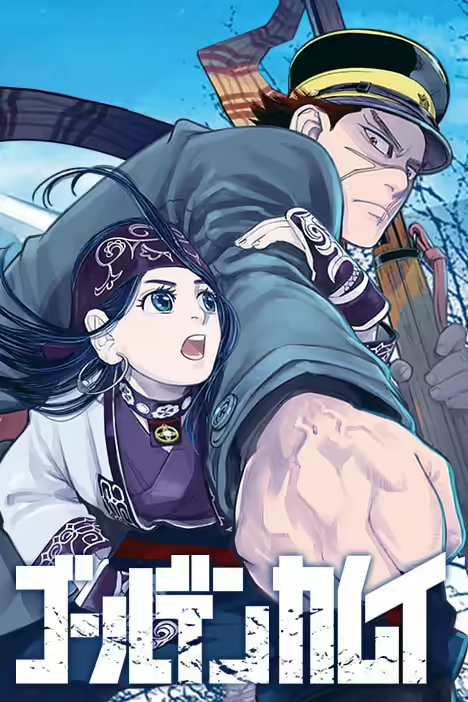
“Golden Kamuy” is my personal favorite manga; it helped me understand exactly what kind of tone and characters I want to bring to life. Its character designs and the way it balances extreme humor alongside the main story are outstanding, and these are traits I actively strive to incorporate into my own work.
Additionally, works like “CLOVER” and “Tsubasa: RESERVoir CHRoNiCLE” have shown me that there is no need to be afraid of unique and complex narrative structures.
What are the key strengths or defining features of your work?
Finitsu
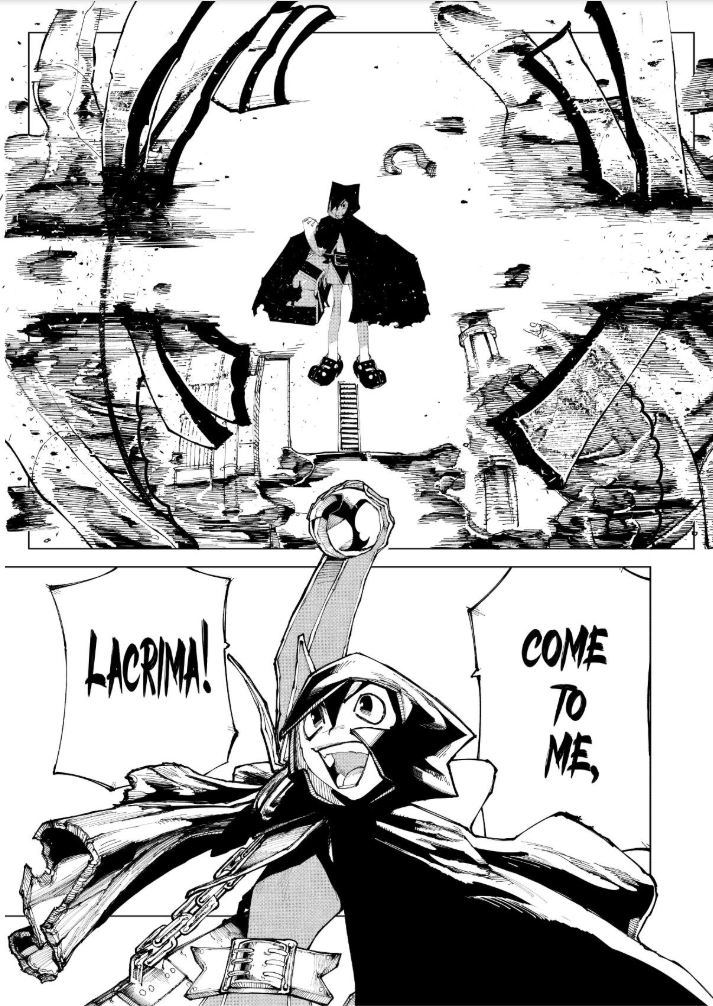
I'd say my character designs are probably the strongest aspect of my work, I want to say my characters and world-building are also strong, but I think that would be biased of me to say, though I'm excited to prove that to the test.
YUPASORN
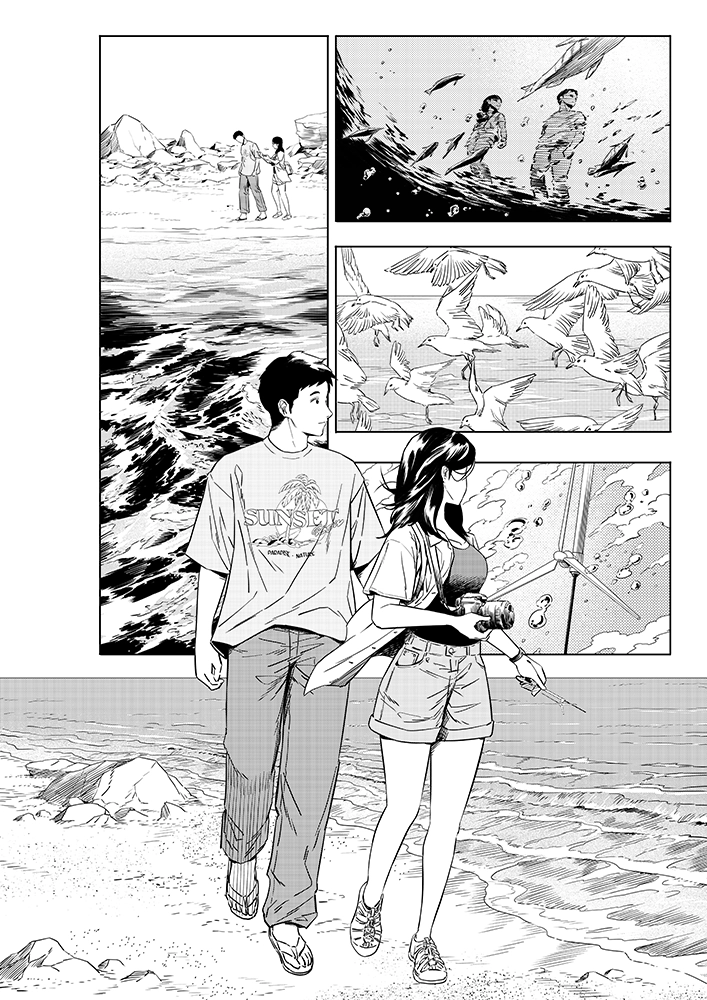
The defining features of my work are unconventional concepts and narrative depth driven by atmosphere and strong visual storytelling.
Kub
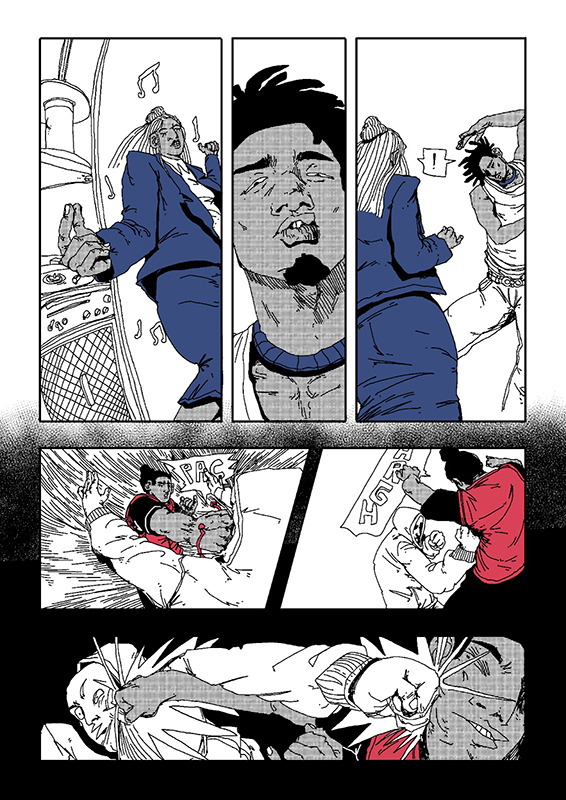
My defining feature has to be direction. Not specifically art direction or story direction, but manga direction. I really feel like if I hadn't thought outside the box and used two different panels to tell two stories in my one-shot “Don't Look Back”, it wouldn't have gotten any recognition. That's one of those things I believe could only be done in manga, so I wanted to try it. That level of creativity in how we approach manga is something I want to bring to all of my works.
Yoikaha
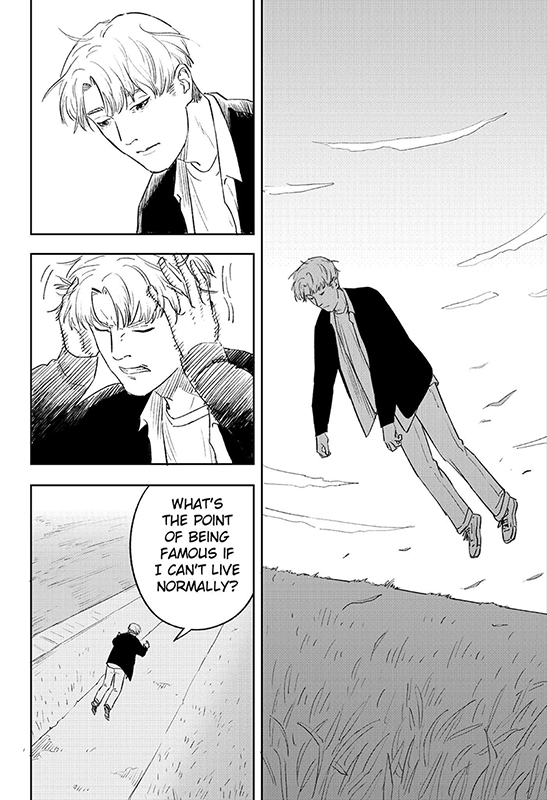
Perhaps it’s the blend of absurdity and humanity. I often create slice-of-life stories mixed with ridiculous and irrational elements, while still trying to keep the characters and emotions grounded.
Damnus
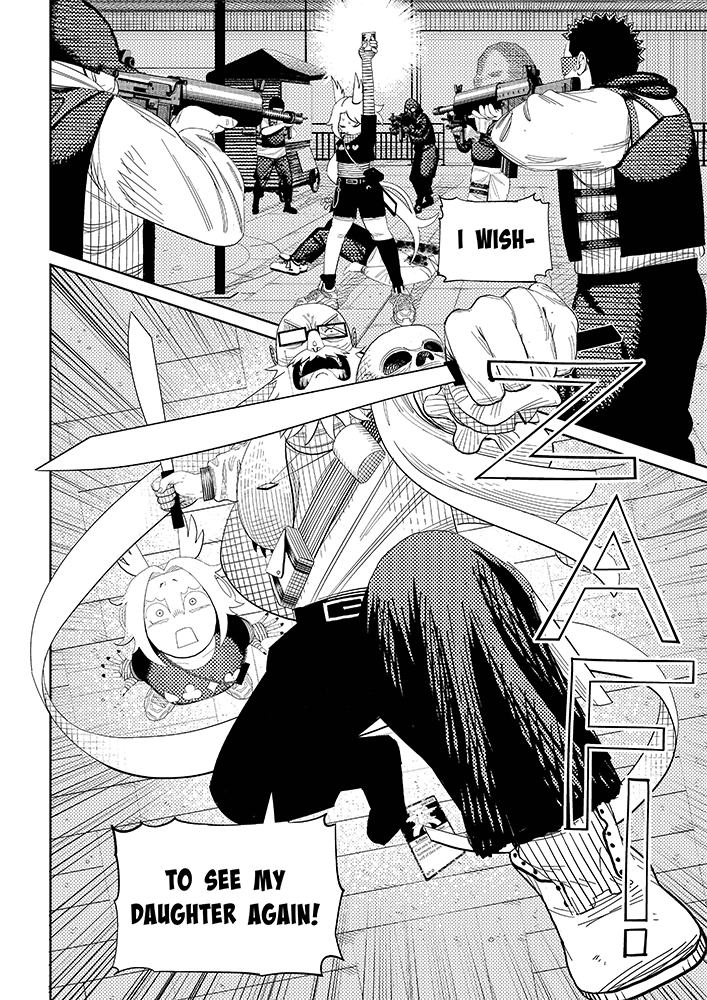
Starting with the very phrase that defines my work, I believe my pitch is original enough to capture people's attention. I also tend to emphasize surprising twists and unexpected moments. This is because many of these ideas come to me at the very last minute of the creative process, breathing even more life into the story.
The next update will be on September 2nd (Wed). We will dive into the unique creative styles of each artist. Please look forward to it!